
Making the decision the unit of the site, not the project
My Digital Platform · in progress
- Role
- Editorial direction; Information architecture; Frontend implementation direction
- Timeframe
- Direction established August 2026. Local manuscript and implementation status reviewed September 10, 2026.
I made individual engineering decisions directly addressable from the index, retaining project context so readers could reach a specific choice without first reading a whole case study.
About the project
My sites, shared interface components, and content publishing system. The engineering site, gideonjr.dev, is one application within the platform. The wider scope includes the consulting and creative-practice surfaces and the components they can share.
- Timeframe
- Current
Overview
Making the engineering choice easier to find
I wanted my engineering site to help someone considering me for a role understand how I approached the work. The previous version led with projects. Each entry had a description, a role, and lists of disciplines and technologies. To find a particular technical choice, the reader had to open the project and look for it.
I chose to give individual decisions their own pages and make them directly accessible from the index. The project would still supply context, while the choice became something I could point a reader toward.
Looking at the previous index
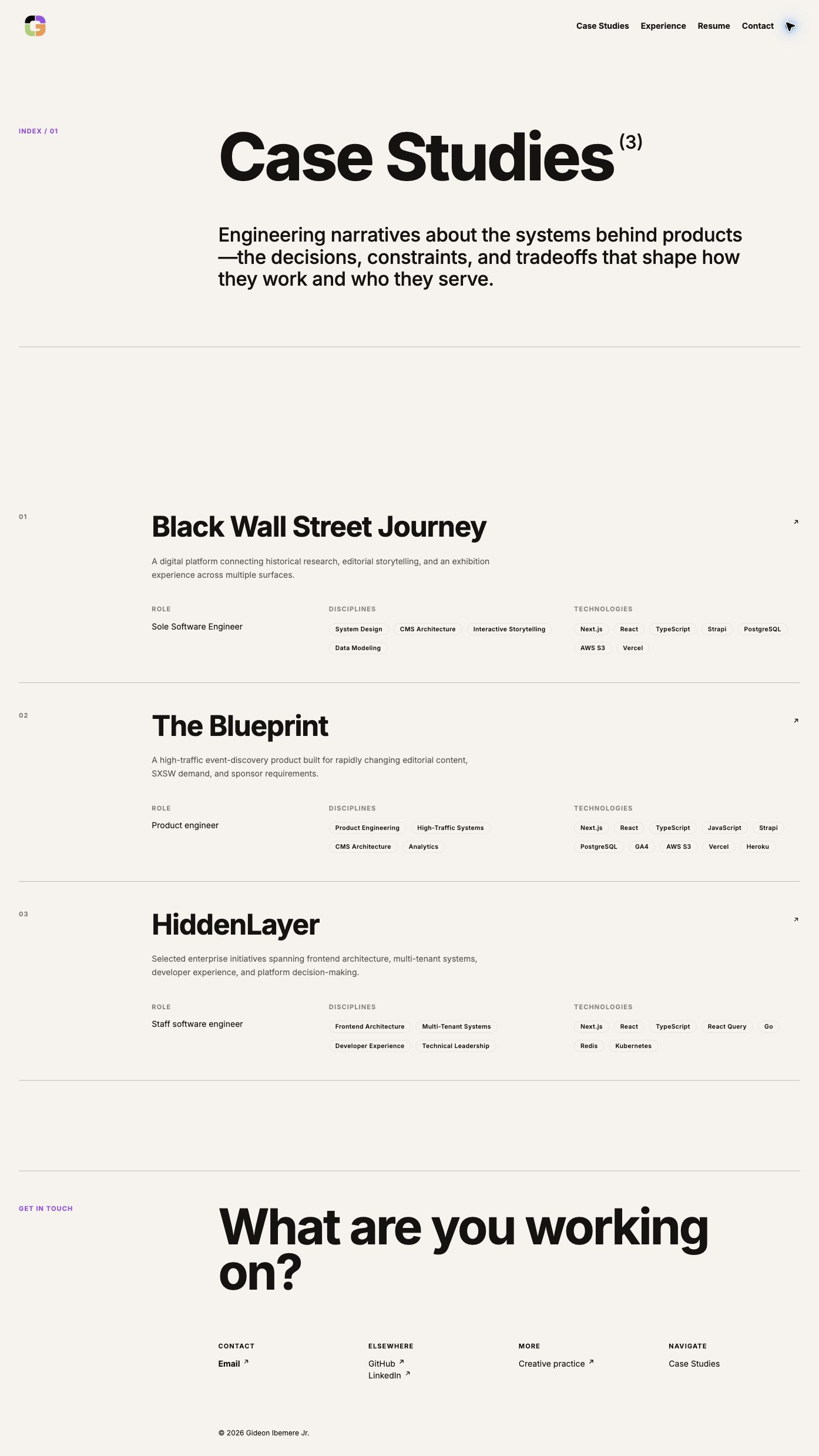
Black Wall Street Journey and The Blueprint appeared as similarly structured entries, even though the work within them involved different problems and different lengths of involvement. Their descriptions introduced the projects, but the index did little to distinguish the engineering decisions I wanted to discuss.
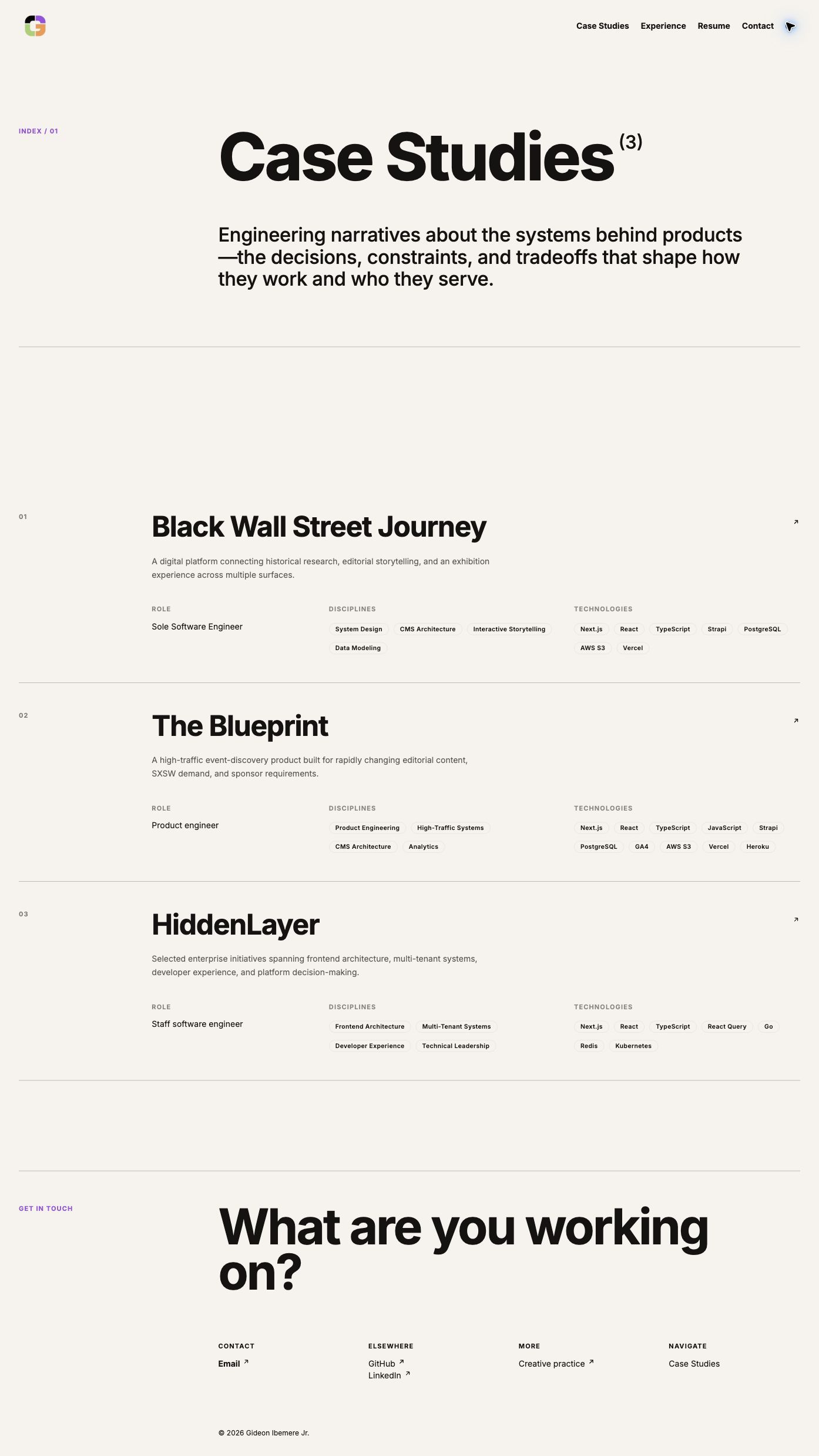
My concern was the distance between that introduction and the material that explained my judgment. For Blueprint, returning to spreadsheet imports and changing the domain names were separate choices with separate reasons. A single project description could introduce the product, but it could not give both choices much attention.
I could have kept the project pages and improved their summaries or added links to sections within them. That remained a workable structure. I wanted to make each choice independently readable and shareable, including when I was sending someone one relevant example rather than the whole portfolio.
Solution
Giving each decision an address
A decision page starts with a specific situation and explains what I chose, the alternatives I considered, and what the choice cost. It can include evidence from the implementation without needing to cover the entire engagement.
The project remains attached to the page. Readers still need to know what the system was for and what I owned. But two decisions from the same project can have separate headlines and addresses. A reader interested in content modeling can reach that explanation directly, without first navigating the rest of the project history.
The manuscript structure supports that reading: an Overview, a Solution, the narrative sections the story needs, and a Reflection. The Solution does not have to appear immediately after the Overview. Some decisions need the constraint or an earlier attempt explained first.
I kept options and ownership as structured information rather than using them to dictate every public heading. That lets the content remain consistent enough to retrieve and maintain while the essay follows its own argument.
The index links directly to each decision. Project context remains attached to it.
Explore the connections
- Reader → Index
- Index → Giving the spreadsheet a new job — Direct decision link
- Index → Taking “Blue” out of the domain model — Direct decision link
- Index → An exhibition at the user's pace — Direct decision link
- Index → Rebuilding without interrupting the exhibition — Direct decision link
Keeping the career context
A collection of decisions does not explain a career by itself. The same format can hold a choice from a short engagement and one from several years of work. That helps each argument stand on its own, but it also removes the duration that would otherwise help a reader understand my experience.
The résumé and project context still have work to do. They establish roles, dates, and the shape of my involvement. The decision page can then concentrate on the particular choice without pretending that it represents everything I did there.
The format also creates an ongoing editorial responsibility. New work can produce new decisions, and older pages need to remain accurate about what was known at the time and what changed later.
Reflection
The project still supplies the context
This structure gives me a way to direct someone to the part of my work relevant to their question. It also makes me more specific when I write: a project can contain many accomplishments, while a decision needs an account of why I took a particular approach.
The site now has decision routes and manuscript rendering. That is further along than the initial plan, when only the writing existed. It does not establish that the format improves a hiring outcome, and I have not evaluated it with readers screening candidates.
I want to learn whether someone can follow the choice, understand my contribution, and identify the cost without reading the whole project first. If the page still requires that much context, I need to improve the explanation or make the project context easier to reach.